Travel kit
Every case has a manifest: which press, which dryer, which rack of tees and caps, which signage panel. Inventory is counted against your RSVP list before departure so a rush at stop two doesn't strand stop three.
Road case to finished merch
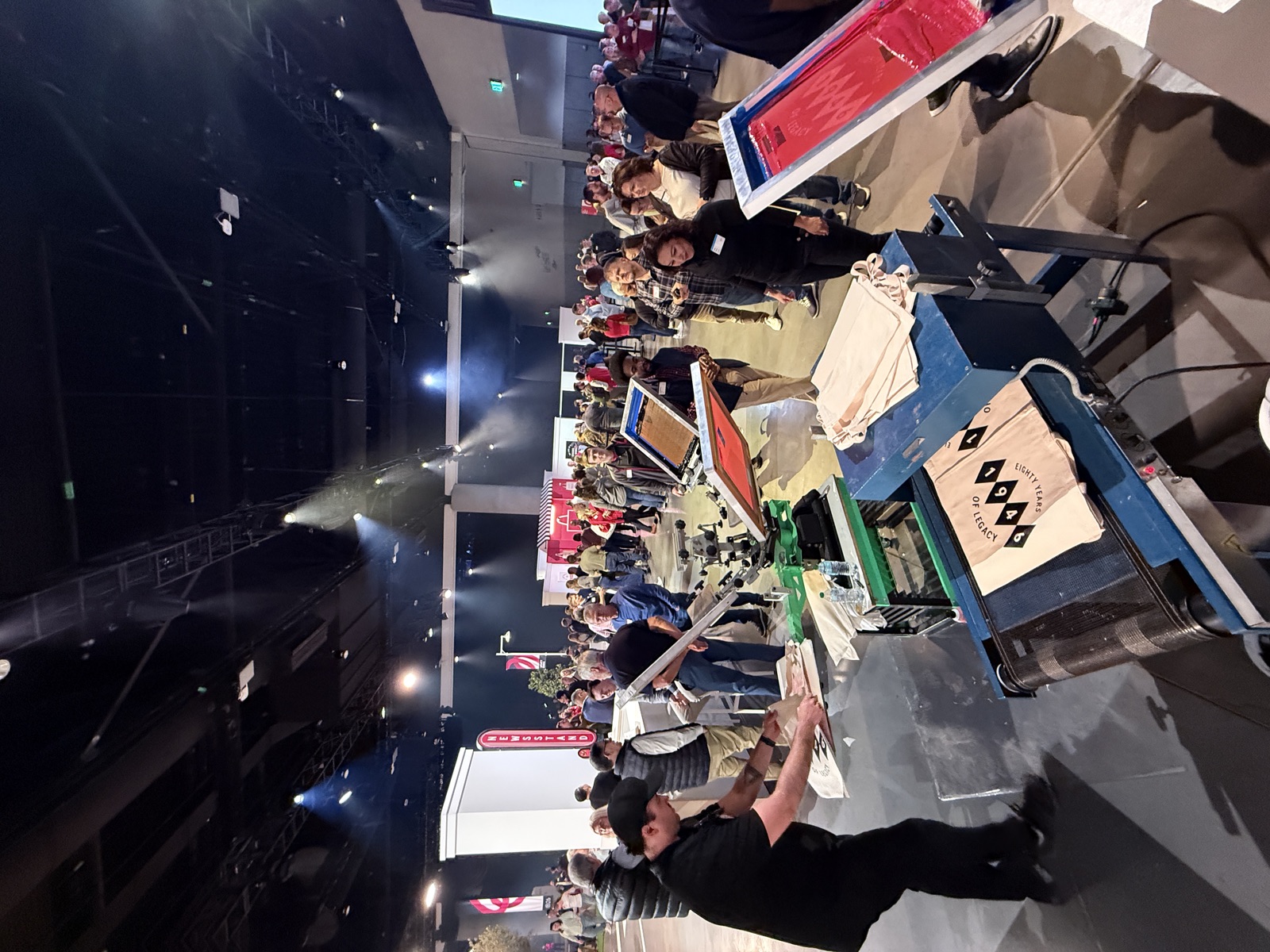
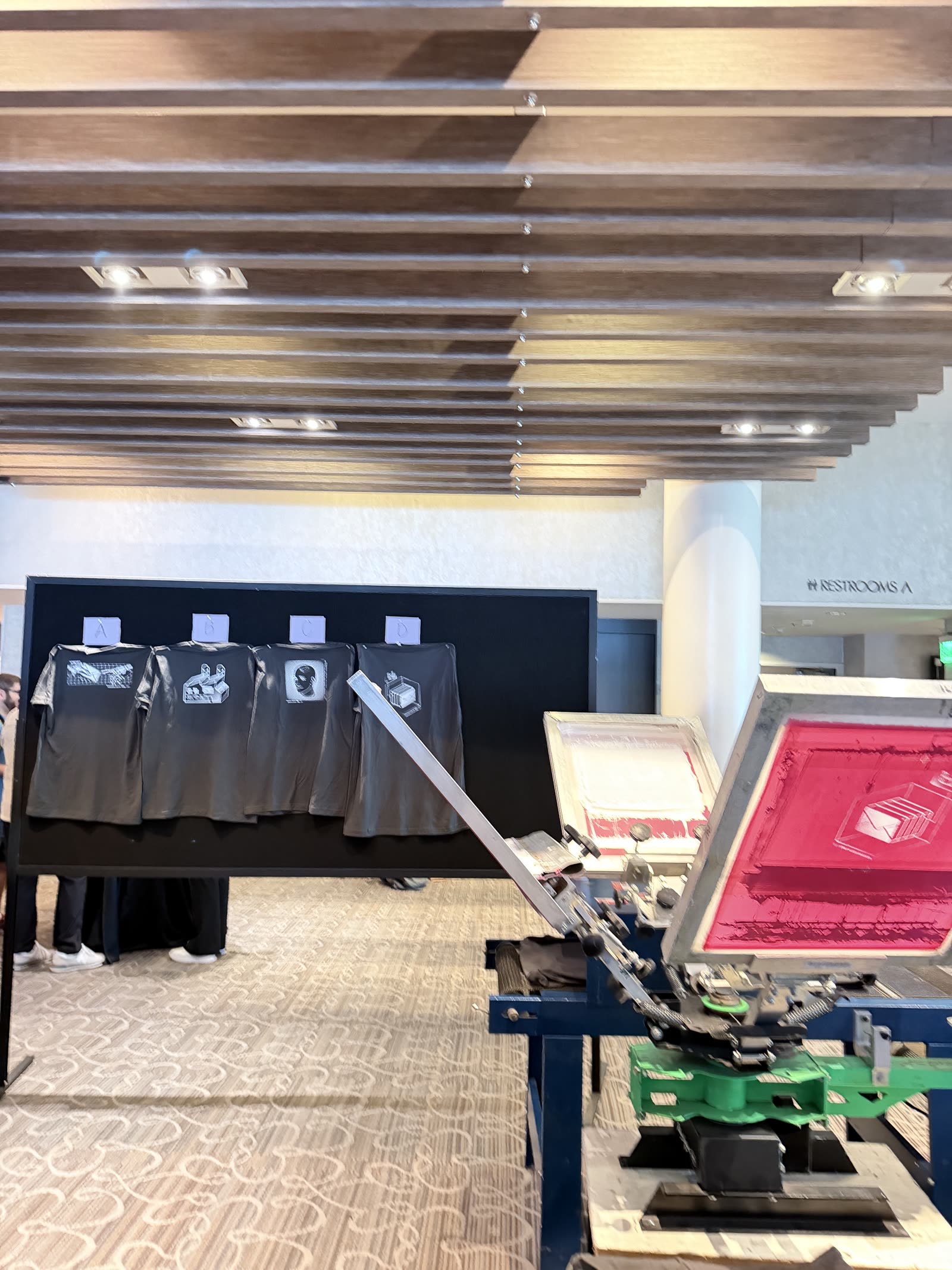
The whole shop lives in road cases: presses, dryers, embroidery heads, transfer stock, racks of blanks. Point it at a convention floor this week and a campus quad the next — the production line travels, the output doesn't change.
Merch Troop drives, ships, or flies the rig wherever the calendar says — crew, cases, blanks, and art files move as one unit.
The route
Road manifest
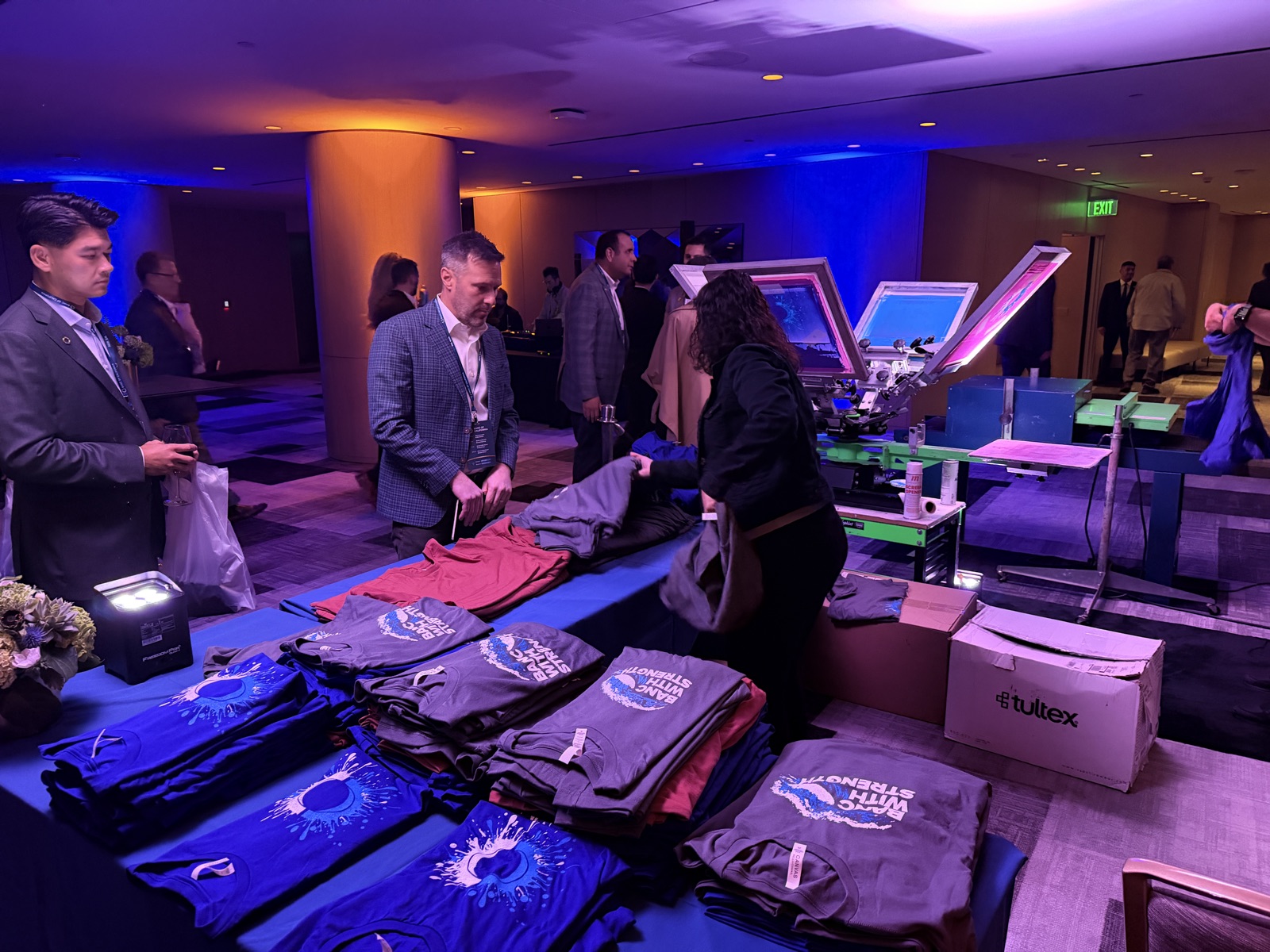
"Mobile" is what unlocks the interesting bookings: a three-stop conference tour where the booth follows the attendees city to city, a launch that hits both coasts in one week, a fair in a field with no walls and no outlets. Because the rig packs to a 10x10 footprint, feeds off two ordinary 120V circuits (or a generator when there's grass underfoot), and rebuilds in about 90 minutes, the decision isn't whether a venue can host live merch production — it's which dates to route first.
Request the event quoteEvery case has a manifest: which press, which dryer, which rack of tees and caps, which signage panel. Inventory is counted against your RSVP list before departure so a rush at stop two doesn't strand stop three.
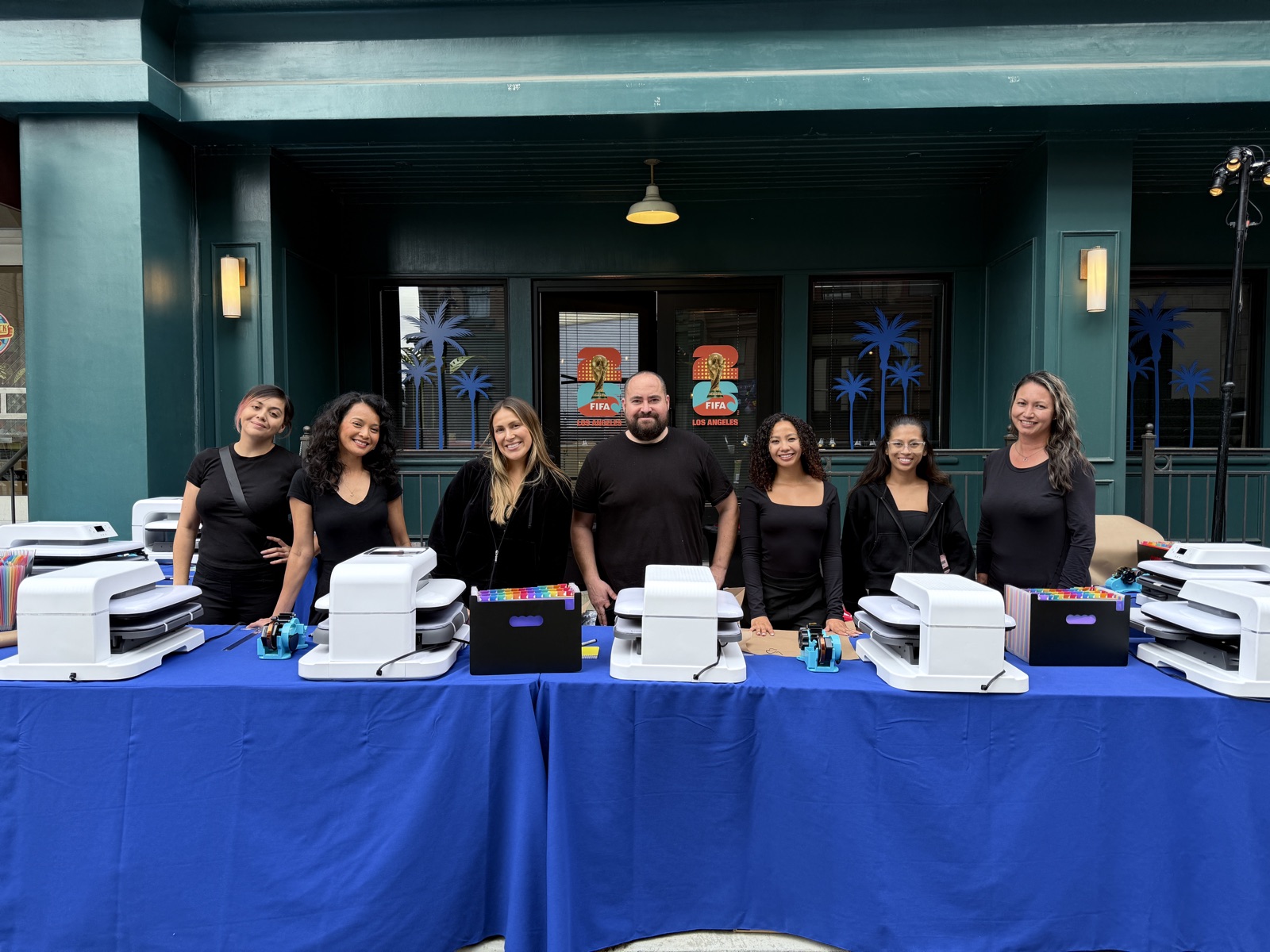
The same crew that drove the truck runs the line, so nothing gets lost in a handoff. A pair of operators covers a one-press stop; larger floors take extra presses and a dedicated runner to keep restocks off the clock.
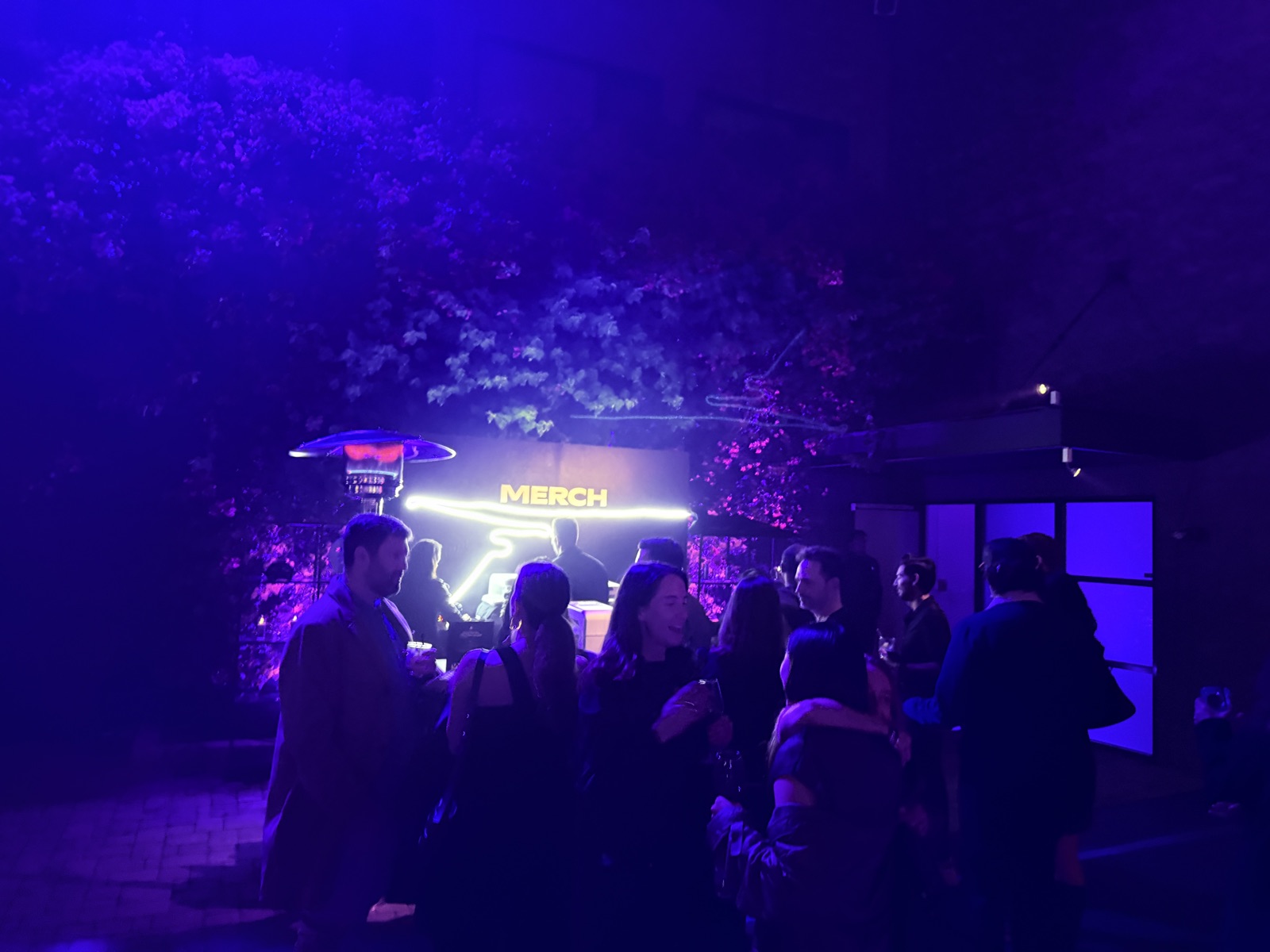
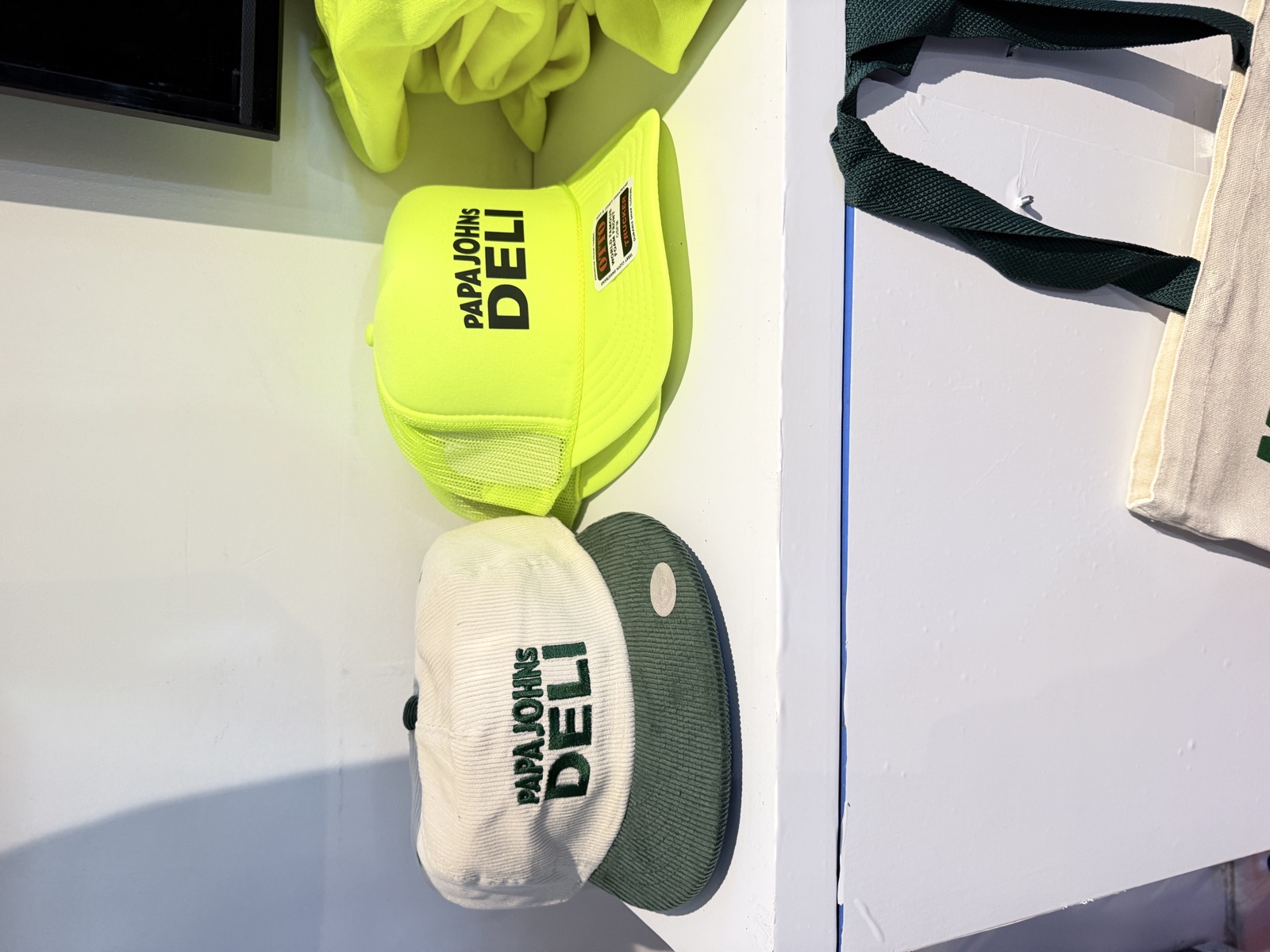
Ballroom carpet, expo concrete, hotel lobby, parking-lot pop-up, festival grass — the booth reconfigures to each. House power indoors, generator outdoors, and the finished-merch quality never knows the difference.
From the road
Road crew flow
Venue photos tell us the route in: loading dock or freight elevator, how far the push, where the outlets hide. Multi-city runs get the whole itinerary mapped at once.
Artwork closes roughly a week ahead so transfers can be produced and test-pressed on your actual garments before anything gets packed into a case.
Roughly ninety minutes from dock to done: booth walls up, presses hot, racks stocked. Teardown runs faster, and the space hands back cleaner than we took it.
Once doors open, a press moves about 60 garments an hour and a double-press stop tops 100 — with a by-design tally delivered when the truck leaves.
Trail notes
A single staffed stop inside Orange County, LA, or San Diego starts near $5,000, with crew billed at $250 an hour; taking the rig past Southern California adds a flat $900 for travel. Multi-stop tours quote per itinerary since trucking, freight, and crew nights change city to city — but every number covers the full package: gear, operators, prep, setup, and pack-out.
Around 60 finished garments per press, per hour, with a two-press configuration clearing triple digits. Because the rig is modular, throughput scales by adding cases to the truck — a bigger crowd means more presses on the floor, not a slower line.
The trucks stage out of Southern California, covering Orange County, Los Angeles, and San Diego on short notice and Las Vegas routinely. For the rest of the map, gear ships ahead and the crew flies — multi-city tours just need lead time to route.
Request a live merch quote
One stop or a five-city run — send the dates, cities, headcounts, and products, and we'll come back with a routed plan and a single number that covers the whole trip.